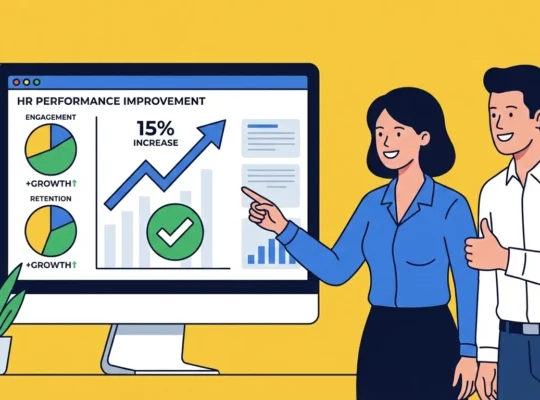



A Reputation management software is more than just a tool; it’s a strategic asset in the current digital world we live in. For HR professionals, understanding and leveraging this software is essential. Your company’s online reputation significantly influences recruitment, employee satisfaction, and overall performance and success. This employee review software provides the insights and controls necessary to proactively shape that reputation, ensuring it aligns with your company’s values and goals. By understanding its capabilities, HR can transform online perceptions into a competitive advantage.
Why Reputation Management Matters to HR:
Your company’s public image significantly influences its ability to attract and retain top talent. A proactive approach to managing your brand reputation can be the difference between success and struggle in HR’s core objectives.
Attracting and Retaining Top Talent: A Strong, Positive Online Reputation Enhances Employer Branding.
In an era where job seekers frequently turn to the internet before even applying, online reputation can either be your greatest asset or your biggest handicap. Candidate perceptions are profoundly shaped by online reviews and mentions, often before they ever interact with your HR team.
- How candidate perceptions are shaped by online reviews and mentions: Potential employees actively seek out ratings and reviews on employee review platforms, and even social media to get a sense of a company’s culture, work environment, and employee satisfaction. These ratings and reviews provide invaluable insights that supplement traditional recruitment materials.
- The impact of a negative reputation on recruitment efforts: A negative reputation, characterized by consistent complaints about management, poor work-life balance, or lack of growth opportunities, can deter top talent from even considering your company. This forces you to work harder, spending more resources to attract and convince candidates who might otherwise be enthusiastic. The cost per hire increases, while the quality of applicants may decrease.
- Building trust and credibility with potential employees: By showing that you are actively listening to feedback and are addressing concerns through reputation management , you show potential employees that you value their opinions and are committed to providing a positive employee experience. This builds trust and credibility, making your company a more attractive prospect.
Boosting Employee Morale and Engagement:
A positive online reputation isn’t just about attracting new talent; it’s also about maintaining a positive, engaged workforce. Employees want to work for companies they can be proud of, and a strong online presence can significantly contribute to employee morale.
- The role of positive reviews and feedback in recognizing and appreciating employees: Positive reviews and feedback often highlight the contributions of individual employees or teams. Sharing these accolades internally can boost morale and reinforce positive behaviors, fostering a culture of recognition and appreciation.
- Addressing negative feedback constructively to improve employee satisfaction: Negative feedback, while uncomfortable, can also be a valuable source of information for identifying areas for improvement within the company. By addressing these concerns openly and taking concrete steps to resolve them, you demonstrate that you value employee feedback and are committed to improving their work experience.
- Creating a culture of open communication and continuous improvement: When employees see that their feedback is heard and acted upon, it fosters a culture of open communication and continuous improvement. This leads to higher levels of employee satisfaction.
Protecting the Company’s Brand and Image:
Ultimately, reputation management is about protecting the overall brand and image of the company. A strong brand reputation not only attracts customers but also investors, partners, and other stakeholders, impacting the long-term success of the business.
- The impact of online reputation on business operations: A damaged online reputation can lead to decreased sales, loss of customers, and difficulty attracting investors. The impact extends far beyond HR, directly affecting the bottom line.
- Monitoring brand mentions across various online platforms: Reputation management software allows you to proactively monitor brand mentions across a wide range of online platforms, including review sites, social media channels, news articles, and forums. This brand monitoring gives you early warnings about potential reputational issues.
- Identifying and mitigating potential reputational crises: By closely monitoring online conversations, you can identify and address potential reputational crises before they escalate. Having a plan in place for responding to negative press or social media backlash is essential for protecting your brand image.
Key Features and Benefits of Reputation Management Software.
Reputation management software features provide a comprehensive suite of tools designed to monitor, manage, and enhance your online presence. Understanding these key capabilities is crucial for selecting the right software for your company’s needs.
Monitoring and Analysis:
At its core, reputation management software provides robust monitoring capabilities, allowing you to keep a pulse on what is being said about your company online.
- Overview of monitoring capabilities – what channels are tracked (review sites, social media, news): This software tracks mentions across a wide range of channels, including review sites (Google, Yelp, Glassdoor), social media, news outlets, blogs, and forums. Comprehensive channel coverage ensures that you don’t miss any important conversations.
- Sentiment Analysis: Understanding the emotional tone of online conversations: Go beyond simply tracking mentions to understand the sentiment behind them. Sentiment analysis identifies the emotional tone of online conversations, categorizing mentions as positive, negative, or neutral. This consumer intelligence allows you to quickly identify and address negative feedback.
- Brand Mention Tracking: Keeping tabs on where the company is being discussed online: Brand mention tracking goes beyond simply identifying mentions of your company name; it also tracks variations, misspellings, and related terms. This ensures that you capture all relevant conversations, even if they don’t explicitly mention your brand name.
Responding to Reviews and Feedback:
Responding to online reviews and feedback is a critical aspect of reputation management. This software helps you manage and improve your customer experience by streamlining this process.
- Centralized review management for efficient response: Instead of logging into multiple review sites individually, reputation management software provides a centralized dashboard where you can view and respond to all your online reviews from a single location.
- Templates and AI-powered response suggestions to improve customer communication: Many platforms offer pre-written response templates and AI-powered response suggestions to save time and ensure consistency in your communications. These tools can help you craft professional and empathetic responses.
- Importance of responding to both positive and negative reviews promptly and professionally: Responding to reviews, both positive and negative, demonstrates that you value customer feedback and are committed to providing excellent service. A prompt and professional response can turn a negative experience into a positive one, showcasing your dedication to customer satisfaction.
Improving Online Presence and SEO:
Reputation management software can also help improve your online presence and search engine optimization (SEO).
- Optimizing business listings across various online platforms: Ensure that your business listings are accurate and consistent across all major online platforms, including Google, Yelp, and Bing. Accurate business listings improve your visibility in local search results, as its benefits local SEO.
- Generating positive reviews through automated review requests: Many platforms offer automated review request features that send targeted emails or SMS messages to customers after a purchase or service interaction, encouraging them to share their feedback.
- Improving local SEO through reputation management efforts: Positive reviews and accurate business listings can significantly improve your local SEO ranking, making it easier for customers to find you online. Effective local reputation management can increase your visibility in local search results.
Reporting and Analytics:
Demonstrating the value of your reputation management efforts requires comprehensive reporting and analytics.
- Tracking Key Performance Indicators (KPIs) to measure reputation management efforts: Track key performance indicators (KPIs) such as review volume, average rating, sentiment score, and response time to measure the effectiveness of your reputation management strategies. These data-driven insights help you understand what’s working and what’s not.
- Demonstrating ROI through reporting features, which leads to better business decisions: Use reporting features to demonstrate the return on investment (ROI) of your reputation management efforts. Show how improved online reputation translates into increased sales, customer loyalty, and brand value.
- Identifying trends and areas for improvement within the organization: Analyze customer feedback to identify trends and areas for improvement within the organization. Use this information to make data-driven decisions that enhance the customer experience.
Competitive Analysis:
Understanding how you stack up against your competitors is essential for staying ahead of the curve.
- Benchmarking against competitors to identify strengths and weaknesses: Use competitive analysis features to benchmark your online reputation against your competitors, identifying areas where you excel and areas where you need to improve.
- Understanding what customers are saying about competitors: Monitor customer reviews and mentions of your competitors to gain valuable insights into their strengths and weaknesses.
- Staying competitive with innovative reputation management initiatives: Use competitive analysis to identify innovative reputation management strategies that your competitors are using and adapt them to your own business. Staying competitive necessitates strategic adaptation.
Navigating the Challenges of Reputation Management Software:
While reputation management software offers many benefits, it’s important to be aware of potential challenges and how to overcome them.
Cost and ROI Considerations:
Understanding the cost and return on investment (ROI) of reputation management software is crucial for justifying the investment.
- Understanding the pricing models of different software options: Research and compare the pricing models of different software options, considering factors such as the number of locations, users, and features included. Some vendors may offer flexible pricing plans.
- Justifying the investment in reputation management: Clearly articulate the value of reputation management to stakeholders, highlighting the potential benefits in terms of increased sales, customer loyalty, and brand value.
- Measuring the return on investment through tangible results: Track key performance indicators (KPIs) such as review volume, average rating, and customer satisfaction scores to measure the ROI of the reputation management solution.
Time Commitment and Resource Allocation:
Addressing the perception that reputation management is time-consuming is important for ensuring successful implementation.
- Addressing the perception that reputation management is time-consuming: Emphasize the time-saving benefits of automation features and centralized management tools. Show how the software can streamline your workflow.
- Automating tasks to improve efficiency: Leverage automation features to automate tasks such as review requests, response templates, and reporting. Automating helps you boost your team’s efficiency.
- Delegating responsibilities effectively: Clearly define roles and responsibilities for reputation management tasks, ensuring that everyone understands their role in maintaining a positive online reputation.
Dealing with Negative or Fake Reviews:
Having a strategy for dealing with negative or fake reviews is essential for protecting your brand’s image.
- Strategy for dealing with malicious and fake reviews: Develop a clear protocol for identifying and reporting fake or malicious reviews to the review platform. Document instances of fake reviews and report them promptly.
- Implementing proactive measures to protect the company from reputation attacks: Implement proactive measures such as monitoring social media for early warning signs of potential reputational crises.
- Techniques for reputation repair after a reputational crisis: Have a crisis communication plan in place for responding to reputational crises.
Choosing the Right Reputation Management Software: A Checklist for HR:
Selecting the right software requires careful consideration of your specific needs and goals.
Key Considerations:
Considerations need to be well thought out to implement the right software.
- Defining specific HR needs and goals for reputation management: Before evaluating software options, clearly define your specific HR needs and goals for reputation management. Do you want to improve employer branding, boost employee morale, or protect the company’s reputation?
- Evaluating software features and functionalities based on those needs (e.g., AI, reporting, integrations): Carefully evaluate software features and functionalities based on your specific needs. Do you need AI-powered sentiment analysis, comprehensive reporting, or integrations with existing HR systems?
- Considering the size and complexity of the organization: Choose a software solution that is appropriate for the size and complexity of your organization. Smaller companies may be able to get by with a simpler, more affordable solution, while larger enterprises may require a more robust and scalable platform.
Popular Reputation Management Software Options:
Here are a few popular platforms with features relevant to HR:
- ReviewTrackers: Offers comprehensive tools for monitoring, responding to, and analyzing online reviews. Provides insights into customer sentiment and trends, helping businesses improve their online presence and identify areas for improvement in customer service.
- Sprinklr: This customer experience management platform helps companies manage their brand reputation across various channels. It allows businesses to respond to customer feedback in real-time and provides insights into customer needs and expectations. Sprinklr also helps brands stay ahead of potential crises by monitoring conversations.
- Vendasta: Offers a comprehensive suite of reputation management solutions for various industries. They offer tools for monitoring online reviews, managing business listings, and generating review marketing campaigns.
Remember to also consult Gartner Peer Insights for verified user reviews to gain more insights into the platforms.
Implementation and Training:
A smooth implementation process and adequate training are essential for successful adoption.
- Planning for a smooth software implementation process: Develop a detailed implementation plan, outlining the steps involved, timelines, and responsibilities.
- Providing adequate training to HR professionals on how to use the software effectively: Provide comprehensive training to HR professionals on how to use the software effectively, covering all key features and functionalities.
- Integrating reputation management into existing HR workflows: Integrate reputation management into existing HR workflows, such as recruitment, onboarding, and performance management. Make sure to align your systems.
Reputation Management Best Practices for HR Managers:
Adopting best practices is crucial for maximizing the effectiveness of your efforts.
Proactive Monitoring and Engagement:
Establish a system for regularly monitoring online mentions and reviews.
- Establish a system for monitoring online mentions and reviews regularly: Delegate tasks and set up alerts so all reviews are addressed efficiently.
- Respond to feedback promptly and professionally: Set up a procedure for responding to both positive and negative feedback promptly and professionally, showing that you value all types of customer feedback.
- Encourage employees to participate in building a positive online reputation: Encourage employees to share positive experiences and testimonials online, contributing to a positive brand presence.
Cultivating a Culture of Transparency and Feedback:
A culture of transparency in your company will greatly support your reviews.
- Foster an environment where employees feel comfortable providing feedback: Create channels for two-way communication. This could be comment boxes or a designated feedback session.
- Address concerns openly and honestly: By showing that issues and concerns are being addressed, this will help improve the overall rating for your company.
- Use feedback to drive continuous improvement: Let this data help you get better, allow insight from the reviews to help your company be more efficient and make sure customers have a good brand image.
Leveraging Social Media for Reputation Management:
Using social media to your advantage will help improve your reviews.
- Monitor social media channels for brand mentions and conversations: Social media can be a great way to get information and also market toward new employees. Create an account on most of the popular media sites.
- Engage with customers and employees on social media: Make sure to respond quickly and professionally to any type of online interaction.
- Use social listening to gain insights: Use information from social media to monitor customer feedback and see your customer satisfaction.
Creating a Reputation Management Crisis Plan:
Know the risk involved with bad press and being ready when it happens is important.
- Identifying potential reputational risks: Come up with possible problems and think of how to mitigate them.
- Developing a plan for responding to reputational crises effectively: Come up with a solid plan on how to address any type of crisis management.
- Training employees on how to handle crisis situations: Everyone should know the steps if something happens and how they should react to it. This will help prevent further backlash.
Conclusion
The ability to proactively shape your company’s online image is essential, and reputation management software offers the tools and insights needed to effectively manage and improve your brand perception. By attracting talent, boosting employee morale, and protecting the company’s brand, these tools are critical for any HR team.
By proactively managing your online presence, you can not only enhance your brand image, but also drive customer loyalty through engagement and positive interactions. Review.jobs is here to help you navigate this ever-evolving landscape and build a strong, positive online reputation.
Frequently Asked Questions
What is Reputation Management Software?
Reputation management software monitors online mentions and customer reviews to help businesses improve their online image and brand perception. It also offers brand monitoring and sentiment analysis.
Who Can Benefit From Reputation Management Software?
Businesses of all sizes, especially those reliant on customer reviews and online presence, such as hotels, restaurants, and service providers, can benefit by improving their brand reputation.
What are the key features to look for in reputation management software?
Essential features include review monitoring, sentiment analysis, reporting, automated alerts, and competitive analysis.
Why is reputation management important for HR?
It helps attract and retain top talent, improves employee morale, and protects the company’s brand, which is crucial for maintaining a positive brand image.
When should a company invest in reputation management software?
Companies should invest when they start receiving regular online feedback or when they want to proactively manage and improve their brand reputation.
Where can I find reliable reviews of reputation management software?
Gartner Peer Insights provides verified user reviews of reputation management tools, helping you make an informed decision.
How much does reputation management software cost?
Pricing varies depending on features and company size. Some platforms offer scalable plans to align with your business’s particular resource allocation.
Is reputation management time-consuming?
While it requires consistent effort, automation features in the software can streamline the process and save time. Efficient automation increases workflow.
How do I deal with fake or malicious reviews?
Implement a protocol for identifying and reporting fake reviews to the platform. Proactive measures can also protect you from reputation attacks.
Can reputation management software help with local SEO?
Yes, it helps optimize business listings, generate positive reviews, and improve visibility in local search results.