


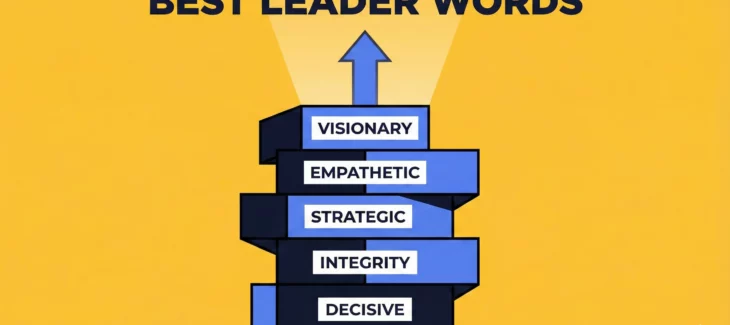
Key takeaways
- Understanding key words that effectively describe great leadership qualities.
- How to use leadership adjectives to enhance employer branding and leadership development.
- Insights on the 3 C’s and 5 key qualities of great leaders.
- The role of emotional intelligence and communication in leadership descriptions.
- Practical examples and tips for incorporating powerful leadership words in reviews and branding.
Selecting the best words to describe a great leader plays a crucial role in shaping how leadership is perceived within an organization and beyond. For Strategic HR Leaders, identifying leadership adjectives that accurately reflect qualities of a great leader can significantly enhance employer branding, guide leadership development programs, and clarify leadership standards across all levels. Review.jobs, a premier platform for authentic employee reviews and employer insights, supports organizations tackling these challenges by providing valuable data on leader qualities and reputation. This article explores effective leader qualities list, leadership traits, powerful words for leadership, and practical advice on integrating these into employee reviews and branding strategies, empowering HR leaders to communicate leadership strengths with clarity and impact.
Why choosing the best words to describe a great leader matters
Precise language has a direct influence on both internal and external perceptions of leadership. Using the right leadership adjectives ensures that the characteristics of strong leaders are clearly communicated, enhancing the leader reputation and aligning with organizational values. Strategic HR Leaders benefit from a well-defined leader personality traits vocabulary to unify leadership messaging across teams.
Aligning leadership language with company culture strengthens the employer brand by reflecting authentic leadership vision and integrity. When leadership descriptions resonate with core values, employees and candidates develop greater trust in the organization’s leadership commitments.
Inconsistent or vague leadership descriptions pose risks to talent attraction and retention. Without a clear words to describe leadership skills framework, leadership strengths and weaknesses may be misunderstood, resulting in confusion or negative leadership perceptions in employee reviews. Standardizing effective leader words mitigates these challenges by establishing clear benchmarks for leadership assessment.
Top words and adjectives to describe great leaders
Great leaders exhibit a range of leadership traits that reveal their qualities and influence. The best words to describe a great leader often highlight attributes such as integrity, empathy, vision, accountability, and resilience. These powerful words for leadership illustrate both character and capability, helping Strategic HR Leaders articulate leadership standards effectively.
Key leadership adjectives include confident, approachable, trustworthy, adaptable, and communicative. Each emphasizes a distinct aspect of leadership skills words essential for inspiring teams, fostering collaboration, and driving organizational success.
The 3 C’s of leadership – competence, courage, and compassion – often underpin effective leader qualities. Additionally, five common qualities of great leaders encompass honesty, confidence, commitment, communication, and empathy. Combining these with transformational leadership words such as innovative, motivational, and authentic creates a comprehensive leader personality traits vocabulary.
- Integrity – adherence to moral principles builds trust and credibility.
- Vision – clear strategic thinking guides organizations toward future goals.
- Empathy – understanding and responding to team needs enhances engagement.
- Accountability – owning decisions fosters responsibility and trust.
- Resilience – maintaining composure under pressure ensures stability.
How to incorporate leadership words into employer branding and reviews
Incorporating effective leader words into employee reviews creates clearer and more constructive leadership feedback. Using leadership adjectives such as strategic, transparent, and supportive helps convey a nuanced view of leadership strengths and areas for growth. This enhances development programs by focusing on tangible leadership and emotional intelligence attributes.
Externally, communicating leadership qualities through employer branding elevates the company’s appeal to high-caliber leadership talent. Highlighting leader qualities list in job descriptions, career sites, and marketing materials draws candidates who value and exhibit similar traits.
Standardizing leadership language across platforms ensures consistency. Creating a shared vocabulary of words to describe a manager and leadership skills words fosters clearer expectations and stronger alignment between actual leader performance and organizational leadership standards.
- Develop a leadership adjective glossary for use in performance reviews.
- Integrate leadership strengths and weaknesses frameworks into HR systems.
- Leverage storytelling in employer branding to showcase authentic leader personality traits.
- Train managers and HR teams on the strategic use of leadership adjectives in communications.
The role of emotional intelligence and communication in effective leadership descriptions
Emotional intelligence stands out as a significant predictor of leadership success. Words that reflect empathetic leadership, such as understanding, patient, and supportive, resonate deeply with employees and candidates, signaling a leader’s commitment to people-centered management.
Communication skills in leadership are foundational; effective leader words such as clear, persuasive, and active listener underscore the importance of exchanging ideas transparently. These attributes foster trust and transparency, enhancing leader reputation across organizational levels.
Incorporating transformational leadership words like inspirational, visionary, and empowering captures the dynamic nature of modern leadership. This language encourages aspirational qualities that motivate teams and sustain high performance.
Measuring and improving leadership reputation with authentic feedback
Anonymous and secure feedback mechanisms provide a safe platform for employees to share genuine insights into leadership effectiveness. This authentic feedback serves as a critical source for refining leadership strengths and addressing weaknesses constructively.
Review.jobs supports organizations by offering tools to collect, analyze, and showcase authentic leadership reviews. Data-driven insights derived from real employee experiences empower HR leaders to enhance leadership development initiatives and employer branding strategies.
Using measurable leadership adjectives combined with quantitative and qualitative feedback helps identify patterns and gaps in leadership reputation. Continuous feedback loops encourage leaders to adapt and grow, fostering a culture of transparency, trust, and high performance.
Comparison of leadership adjectives reflecting emotional intelligence versus strategic leadership
| Emotional intelligence words | Strategic leadership words |
|---|---|
| Empathetic | Visionary |
| Approachable | Decisive |
| Patient | Innovative |
| Supportive | Result-oriented |
| Attentive | Competent |
Frequently asked questions
What words describe a good leader?
Words that describe a good leader include trustworthy, visionary, empathetic, accountable, confident, adaptable, and communicative. These leadership adjectives capture both the character and skills necessary for effective leadership.
What are the 3 C’s of leadership?
The 3 C’s of leadership are competence, courage, and compassion. These core attributes represent a leader’s ability to perform skills effectively, make bold decisions, and empathize with others.
What are the 5 qualities of a great leader?
Five qualities of a great leader are honesty, confidence, commitment, communication, and empathy. These qualities create a foundation for building trust and inspiring teams.
What is the highest compliment to a leader?
The highest compliment a leader can receive is being recognized for inspiring loyalty and achieving results through the success of others, demonstrating both influence and empowerment.
How can leadership qualities be demonstrated effectively?
Leadership qualities can be demonstrated effectively through consistent actions aligned with values, transparent communication, accountability for decisions, empathetic engagement with teams, and fostering a positive work environment.
What traits make a leader successful?
Traits that make a leader successful include strategic thinking, emotional intelligence, decisiveness, resilience, humility, and the ability to motivate and support others.
How does emotional intelligence impact leadership?
Emotional intelligence impacts leadership by enabling leaders to understand and manage their own emotions, connect empathetically with team members, resolve conflicts, and adapt communication styles to inspire and motivate effectively.
What are some examples of effective leadership adjectives?
Examples of effective leadership adjectives include authentic, inspirational, collaborative, visionary, adaptable, accountable, and communicative.
How can leaders inspire and motivate their teams?
Leaders inspire and motivate teams by setting clear visions, communicating with transparency, recognizing contributions, fostering inclusion, demonstrating empathy, and empowering team members to achieve their best.
Why is honesty important in leadership?
Honesty is important in leadership because it builds trust, establishes credibility, encourages open communication, and creates an ethical culture that supports sustainable success.
Final thoughts
Using the best words to describe a great leader empowers Strategic HR Leaders to define and communicate clear leadership standards that resonate across organizational layers. This clarity enhances employer branding by reflecting authentic leadership vision and integrity, attracting and retaining top-tier talent. Leveraging platforms like Review.jobs allows organizations to gather authentic employee insights, providing data-driven paths to improve leadership reputation. Adopting standardized, impactful leadership language strengthens leadership development initiatives, fosters engagement, and drives organizational success.