

Key takeaways
- Active management of employer reputation is essential to attract and retain top talent.
- Authentic employee reviews are a cornerstone for accurate reputation management.
- AI-powered sentiment analysis enhances understanding of employee feedback.
- Centralized and anonymous review management improves workflow efficiency and trust.
- Integrating employer profiles with websites and social media boosts brand transparency and reach.
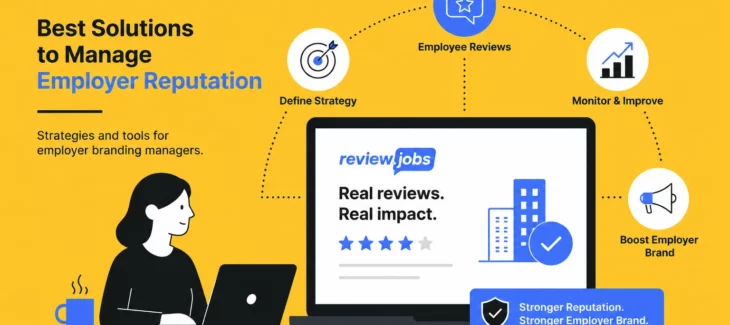
The best solutions to manage employer reputation have become critical for organizations aiming to attract and retain top talent in a competitive hiring environment. A strong employer reputation directly influences how candidates perceive a company, making reputation management an essential focus for Employer Branding Managers and HR leaders. Review.jobs, a certified platform, offers comprehensive tools designed to streamline this process—from collecting authentic employee reviews to leveraging AI-driven insights that inform strategic decisions. This article explores targeted strategies, cutting-edge tools, and industry best practices tailored to help Employer Branding Managers build, maintain, and enhance their employer reputation effectively.
Understanding employer reputation and its importance
Employer reputation encompasses the collective perception current and potential employees have about a company’s work environment, culture, and leadership. This reputation strongly influences recruitment outcomes, employee retention, and overall organizational success. Maintaining a positive company culture and reputation attracts skilled professionals and fosters employee loyalty.
A seamless connection exists between employer branding strategies and the broader organizational culture. Effective branding initiatives highlight authentic company values and the unique employee value proposition (EVP), helping build an emotionally engaging identity that resonates with both internal teams and outside talent.
A well-crafted employer reputation showcases transparency, fairness, and responsiveness, setting the stage for competitive advantage in talent acquisition. Strong reputations contribute to lowering hiring costs, decreasing turnover, and enhancing productivity through engaged workforce members.
Key challenges in managing employer reputation
One significant challenge in employer reputation management is the fragmentation of employee feedback across numerous platforms. Collecting and analyzing scattered employee reviews without a centralized system results in inefficiencies and inconsistent messaging.
Ensuring the authenticity and anonymity of submitted feedback often proves difficult, deterring honest communication and risking biased or fake reviews affecting public perception. Additionally, the moderation of reviews manually demands substantial time, delaying crucial responses and damage control efforts.
Negative online reviews present a risk of discouraging top-tier candidates and harming a company’s brand image. Without powerful reputation monitoring tools and timely interventions, these reviews can linger unaddressed, eroding trust with prospective talent and current employees alike.
Effective strategies for managing employer reputation
A multipronged approach to managing online reviews and employee feedback helps safeguard and enhance employer reputation. First, establishing dedicated channels for transparent and anonymous employee feedback urges open communication, revealing actionable workplace insights. Surveys, direct feedback forms, and social media listening all offer flexibility in gathering diverse perspectives.
Deploying review moderation automation ensures feedback adheres to company guidelines quickly and efficiently, freeing HR teams from repetitive tasks and accelerating response times. Automation also helps maintain a respectful and constructive review environment.
Prompt and transparent reply strategies to both positive and negative reviews build trust and demonstrate commitment to employee wellbeing. Addressing concerns, clarifying misunderstandings, and highlighting improvements encourage prospective employees to view the company favorably.
Leveraging data-driven HR decisions through sentiment analysis provides deep insights into employee satisfaction and cultural strengths or weaknesses. These AI-powered insights support proactive employer branding strategies rather than reactive damage control.
- Centralize employee reviews from all platforms for consistency
- Encourage anonymous and secure feedback channels
- Implement automated moderation to manage review quality
- Use AI-powered sentiment analysis for deeper feedback insights
- Respond transparently to online reviews and employee concerns
- Integrate employer profiles with corporate websites and social media
Tools and software solutions for employer reputation management
Selecting the right online reputation management software tailored for mid to large-sized companies is critical for scalability and effectiveness. Features to prioritize include anonymity safeguards, AI-powered reputation insights, seamless integration with existing HR platforms, and automation capabilities.
A comparison of key features often found in top reputation management tools is illustrated below to aid decision-making:
Review.jobs offers a centralized platform combining authentic review collection, AI-driven sentiment analysis, and employer profile integration, facilitating holistic reputation management from a single interface.
Comparison of reputation management software features
| Platform | Anonymous feedback | AI-powered insights | Moderation automation | Integration capabilities | Verified / authentic reviews |
|---|---|---|---|---|---|
| Review.jobs | Yes | Yes | Yes | Yes | Yes |
| Glassdoor | Yes | Yes | Yes | Yes | Limited |
| Comparably | Yes | Yes | Limited | Limited | Limited |
| Trustpilot | No | Yes | Yes | Yes | Yes |
What separates Review.jobs is not any single feature but the combination. Glassdoor, Comparably, and Trustpilot each cover parts of the picture, yet none pair verified, authentic feedback with anonymous submission, automated moderation, and deep HR integrations in one platform. Most review sites rely on self-submitted anonymous posts with no proof the reviewer ever worked at the company, which is exactly where authenticity breaks down. Review.jobs closes that gap by verifying reviews at the source, so the reputation you manage reflects real employees rather than unconfirmed claims.
Repairing and enhancing a damaged employer reputation
Proactive and sincere communication underpins efforts to repair a damaged employer reputation. Transparency about identified issues, acknowledgments of employee concerns, and concrete plans for improvement demonstrate accountability and sincerity.
Strong emphasis on promoting the company’s employee value proposition (EVP) can help realign public perception by highlighting workplace strengths, career development opportunities, and cultural benefits. Engaging employees as brand ambassadors further amplifies authentic messages.
Collaboration between leadership and HR teams is essential for coordinated reputation repair. Initiatives like targeted employee engagement programs, leadership visibility, and feedback loops reinforce trust and rebuild morale.
Best practices to protect and sustain employer reputation
Maintaining consistent messaging and cohesive employer branding strategies assures candidates and employees of the brand’s reliability. Storytelling rooted in genuine organizational values deepens connections and supports ongoing reputation management.
Regular utilization of reputation monitoring tools allows timely detection of emerging issues, facilitating swift action before concerns escalate. Integrating these tools into daily HR workflows ensures reputation remains a priority.
Training programs for HR and leadership teams foster understanding of their pivotal roles in reputation stewardship. Empowered with skills in feedback management, conflict resolution, and transparent communication, these stakeholders become proactive defenders of the employer brand.
Frequently asked questions
What are the best strategies to manage employer reputation?
Effective strategies include centralizing employee feedback, ensuring anonymous and secure review submission, automating moderation, responding transparently to all reviews, leveraging AI-powered sentiment analysis, and integrating employer profiles with career websites and social media.
How can companies collect authentic employee reviews?
Companies can encourage honest and authentic reviews by providing anonymous feedback channels, utilizing secure platforms that protect identity, offering multiple collection methods such as surveys and direct input, and fostering an open company culture where employees feel safe to share.
What tools are effective for online reputation management?
Online reputation management software featuring anonymous feedback collection, AI-driven insights, moderation automation, and integration capabilities are most effective. Platforms like Review.jobs excel in providing an all-in-one solution tailored for mid to large organizations.
How to respond to negative employee feedback?
Respond promptly and transparently by acknowledging concerns, offering clarifications or solutions, and demonstrating commitment to improvement. This fosters trust and shows responsiveness, which can mitigate reputational damage.
What role does employee value proposition (EVP) play in employer reputation?
EVP articulates the unique benefits and values an employer offers employees, shaping how the company is perceived. A strong EVP enhances reputation by differentiating the company in the job market and reinforcing positive internal culture.
How can AI and sentiment analysis improve reputation management?
AI-powered sentiment analysis helps decode large volumes of employee feedback, revealing trends, strengths, and areas needing attention. This enables data-driven HR decisions and proactive employer branding initiatives rather than reactive responses.
What are best practices to protect a company’s reputation?
Protect reputation by maintaining consistent messaging, regularly monitoring feedback using dedicated tools, training leadership and HR teams on reputation management, encouraging open communication, and automating review moderation to uphold quality.
How to repair a bad reputation at work?
Repair through honest communication, addressing employee concerns, promoting the EVP, engaging leadership visibly, implementing improvement plans, and amplifying positive stories through authentic employee advocacy.
How to integrate employer profiles with websites and social media?
Integrate by embedding review widgets, updating employer brand content regularly, linking social media accounts, sharing employee testimonials, and showcasing ratings and reviews on corporate career pages to enhance transparency and candidate engagement.
What helps maintain and improve company reputation?
Ongoing feedback collection, transparent communication, leadership involvement, monitoring reputation with technology, and delivering on promises reflected in the EVP help sustain and elevate company reputation.
How to encourage honest and anonymous employee feedback?
Provide secure anonymous channels, assure confidentiality, communicate the purpose and benefits of feedback, and ensure no retaliation policies to create a safe environment for employees to share insights genuinely.
What are tips for managing reviews from multiple platforms?
Use centralized review management systems, regularly monitor all platforms, standardize response protocols, automate moderation where possible, and align messaging across channels to maintain a consistent employer brand.
Final thoughts
Managing employer reputation remains a dynamic and essential component of attracting talent and fostering employee engagement. Combining authentic employee feedback, AI-powered sentiment insights, and integrated management tools ensures Employer Branding Managers can strategically protect and enhance their brand image. Platforms like Review.jobs provide the comprehensive capabilities needed to streamline workflows, build trust through transparency, and sustain a compelling employer profile in an increasingly competitive job market.