


Key takeaways
- Understand the critical role of preparation and planning in interviewing techniques
- Learn different types of interviewing techniques tailored to varied roles and situations
- Apply the STAR method and effective questioning strategies to uncover candidate potential
- Discover ways to minimize bias and enhance fairness through structured and moderated interviews
- Utilize AI-powered tools and data-driven insights to elevate interview analysis and decision making
Interviewing techniques shape the success of hiring processes and significantly impact employer branding. For Talent Acquisition Specialists, mastering these techniques means more precise candidate selection, improved fairness, and enhanced candidate experience. This guide provided by Review.jobs dives into essential interviewing methods and practical strategies to refine your approach. You’ll gain actionable insights on behavioral interviewing, structured questioning, bias reduction, and leveraging AI-powered analytics, all designed to elevate your recruitment outcomes. Whether managing diverse roles or complex interview panels, understanding and implementing these techniques empowers you to make confident hiring decisions aligned with your organizational goals.
The foundation of effective interviewing techniques
Starting with strong preparation forms the backbone of effective interviewing techniques. Defining clear job requirements and candidate evaluation criteria ensures that interviews remain focused and aligned with organizational needs. Establishing an interview structure with distinct phases — introduction, main discussion, and closing — creates consistency and clarity throughout the process. The 5 P’s of interviewing — preparation, posture, politeness, punctuality, and perseverance — guide interviewers toward professionalism, helping foster a positive candidate experience and reinforcing employer branding.
Planning includes selecting the appropriate interviewing technique based on the role and interview goals, whether behavioral interviewing, competency-based interviews, or panel formats. Early clarity in interview objectives and candidate attributes supports better questioning strategies that produce meaningful insights. Integrating soft skills assessment and cultural fit evaluation in the preparation phase allows interviewers to capture holistic candidate profiles beyond technical competencies.
- Define job requirements and candidate evaluation criteria
- Design interview structure with clear phases
- Select appropriate interviewing techniques for each role
- Include soft skills and cultural fit considerations in preparation
- Align interviewer behaviors with the 5 P’s of interviewing
Exploring core interviewing techniques
Various core interviewing techniques offer tailored approaches to uncover candidate potential. Behavioral interviewing utilizes candidates’ past experiences to predict future performance, often employing the STAR interviewing method, which structures responses around Situation, Task, Action, and Result. Situational interviewing explores how candidates might handle hypothetical future scenarios, revealing problem-solving and adaptability skills.
Competency-based interviews focus on evaluating specific skills and attributes critical to the job’s success, helping recruiters gauge technical and interpersonal abilities. Panel interview techniques bring multiple evaluators together to promote diverse perspectives and reduce individual biases, while stress interviews assess candidates’ reactions and resilience under pressure. Each technique serves particular hiring needs, empowering Talent Acquisition Specialists to select the best approach for the situation at hand.
Comparison of core interviewing techniques
| Technique | Focus area | Best use case | Key advantage |
|---|---|---|---|
| Behavioral interviewing | Past experiences | Roles requiring demonstrated skills | Predicts future performance |
| Situational interviewing | Hypothetical scenarios | Problem-solving roles | Assesses adaptability |
| Competency-based interview | Specific skills | Technical or role-specific hiring | Evaluates precise competencies |
| Panel interview | Multiple perspectives | Senior or complex roles | Reduces individual bias |
| Stress interview | Pressure handling | High-stress job environments | Measures resilience |
- Behavioral interviewing with STAR method
- Situational interviewing
- Competency-based interviews
- Panel interview techniques
- Stress interviews
Enhancing interview effectiveness through communication and observation
Effective questioning strategies combined with active listening techniques elevate interview effectiveness. Using open-ended interview questions encourages candidates to elaborate and reveal deeper insights, fostering richer conversations. Active listening — focusing attentively on responses without premature judgment — helps interviewers identify underlying motivations and soft skills, strengthening candidate evaluation accuracy.
Non-verbal communication in interviews provides valuable clues about candidate confidence, honesty, and engagement. Observing body language, eye contact, and facial expressions complements verbal responses and enriches overall judgment. Emphasizing the 5 C’s of interviewing — clarity, communication, consistency, confidence, and courtesy — ensures interviews are conducted professionally and respectfully, maintaining a positive atmosphere that improves candidate experience.
- Use open-ended questions to encourage detailed responses
- Apply active listening to uncover underlying insights
- Observe non-verbal cues such as posture and facial expressions
- Maintain the 5 C’s for professional communication
- Create a comfortable setting to reduce candidate anxiety
Reducing bias and ensuring fairness in interviews
Minimizing bias is crucial for objective candidate selection and compliance. Structured interviews with standardized questions ensure consistency across candidates, enabling fair comparisons based on predefined evaluation criteria. Moderator-led interview moderation overseen by skilled facilitators helps avoid leading questions and off-track discussions, preserving interview integrity.
Anonymous submissions of candidate feedback and systematic interview feedback collection promote transparency and allow continuous improvement without favoritism. Panel interview techniques also dilute individual biases by involving multiple evaluators. Recognizing common interviewing challenges such as confirmation bias or halo effects, recruiters can adjust techniques accordingly, reinforcing equitable hiring practices.
- Use structured interviews with standardized questions
- Implement interview moderation for consistency
- Collect anonymous and secure candidate feedback
- Engage panel interviewers for balanced evaluations
- Train interviewers to recognize and mitigate biases
Leveraging technology for data-driven interviewing
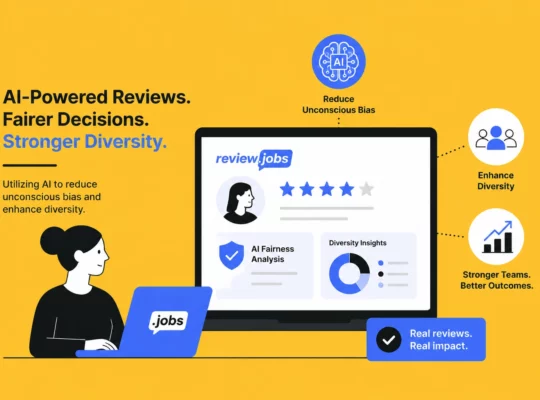
Technology enhances interviewing techniques through data-driven recruitment insights and AI-powered interview analysis. Automated review moderation facilitates efficient and unbiased evaluation of interview content, while sentiment analysis in recruiting interprets candidate responses beyond words to detect emotions and attitudes. These tools provide objective supporting data to guide hiring decisions.
Public employer profiles enriched with positive candidate experience feedback promote employer branding through social web integration. Seamless interview integration with applicant tracking systems streamlines workflows and reduces administrative burden. Incorporating these advancements helps Talent Acquisition Specialists enhance accuracy, speed, and fairness, enabling more informed candidate selection.
- Use AI-powered interview analysis to detect sentiment and bias
- Leverage automated review moderation for objective feedback
- Integrate interview data with applicant tracking systems
- Promote employer branding through public candidate feedback
- Adopt data-driven recruitment strategies for better decisions
Overcoming common interviewing challenges
Interviewing challenges include inconsistent interviewer skills, candidate nervousness, bias risks, and difficulty interpreting complex responses. Adapting interviewing techniques through targeted interviewer training enhances competence and confidence. Creating a comfortable environment reduces candidate anxiety and supports openness.
Applying the 10-second rule emphasizes the impact of first impressions, motivating interviewers to project professionalism from the outset. Clear communication and structured interview phases aid clarity and fairness. When high-stakes roles require specialized approaches, threat assessment interviews add valuable evaluation layers. Despite obstacles, prioritizing candidate experience and continuous feedback collection ensures ongoing process improvement and reinforces employer reputation.
- Train interviewers to standardize skills and approach
- Apply the 10-second rule for positive first impressions
- Create comfortable interview settings to ease candidate nerves
- Use structured interview phases to maintain consistency
- Implement threat assessment interviews for sensitive roles
Frequently asked questions
What are the 5 C’s of interviewing?
The 5 C’s of interviewing refer to clarity, communication, consistency, confidence, and courtesy. These guide interviewers to conduct structured, professional, and respectful interviews that promote accurate assessments and positive candidate experience.
What is the STAR method for interviewing?
The STAR method is a behavioral interviewing technique that structures candidate responses into Situation, Task, Action, and Result. It helps interviewers evaluate past experiences and the outcomes of a candidate’s actions for a clearer picture of competencies.
How do you structure an effective interview?
An effective interview is structured into phases: an introduction to set the tone, the main discussion with core questions (often using open-ended and competency-based queries), and a closing segment to address candidate questions and outline next steps. This structure promotes clarity and consistency.
What are the best interviewing techniques for recruiters?
Best interviewing techniques vary by role but typically include behavioral interviewing with the STAR method, situational interviewing for problem-solving insights, competency-based interviews to test specific skills, and panel interviews to incorporate diverse evaluator perspectives.
How can I assess a candidate’s soft skills during an interview?
Assess soft skills by posing open-ended questions, using situational prompts, and observing non-verbal communication. Active listening and follow-up questions further reveal interpersonal traits like communication, adaptability, and teamwork.
What is the 5 P’s of interviewing and why is it important?
The 5 P’s of interviewing are preparation, posture, politeness, punctuality, and perseverance. These elements ensure interviewers maintain professionalism, foster positive candidate impressions, and enhance overall effectiveness and fairness.
How important is first impression in an interview?
The first impression is crucial; the 10-second rule highlights how quickly an interviewer forms opinions based on appearance, demeanor, and communication style. Positive first impressions set the tone for a successful interview and improve candidate engagement.
What types of interview questions yield the best insights?
Open-ended, behavioral, and situational questions provide the best insights by encouraging candidates to share detailed experiences, thought processes, and problem-solving approaches, revealing both competencies and cultural fit.
How can AI and data analysis improve interviewing?
AI and data analysis improve interviewing by providing objective review moderation, sentiment analysis, and predictive analytics that detect bias and emotional cues, supporting more informed, fair, and efficient hiring decisions.
What is the 10-second rule in an interview?
The 10-second rule refers to the critical impact of the initial 10 seconds during an interview, where first impressions about professionalism and approachability are formed, influencing the overall candidate and interviewer interaction.
How do you create a comfortable environment for candidates?
Creating a comfortable environment involves offering a warm welcome, explaining the interview process clearly, maintaining polite communication, minimizing interruptions, and showing understanding to reduce candidate anxiety and foster openness.
What are common challenges in interviewing and how can they be overcome?
Common interviewing challenges include bias, inconsistent interviewer skills, candidate nerves, and ineffective questioning. Overcoming these involves interviewer training, using structured techniques, creating supportive settings, and employing technology for objective feedback.
How can sentiment analysis be applied in interviewing?
Sentiment analysis interprets emotional tone in candidate responses, enabling recruiters to assess enthusiasm, hesitation, or confidence levels, thus enriching traditional evaluation methods with nuanced emotional insights.
What techniques are effective for threat assessment interviews?
Effective threat assessment interviews utilize structured, scenario-based questioning, coupled with behavioral observation and consistency checks, to identify potential risks or security concerns in high-stakes hiring.
How can interview feedback be collected and used effectively?
Interview feedback can be collected through standardized forms, anonymous candidate surveys, and digital platforms. Using this data to identify strengths and areas for process improvement enhances fairness, interviewer skills, and overall candidate experience.
Final thoughts
Mastering interviewing techniques combines methodical preparation, skilled communication, bias reduction, and strategic technology use to elevate hiring success. By embracing structured approaches like behavioral interviewing and the STAR method alongside AI-driven insights, Talent Acquisition Specialists can make precise, unbiased decisions that benefit candidates and organizations alike. Maintaining professionalism through the 5 C’s and 5 P’s and prioritizing candidate experience enhances employer branding and cultivates a reputation as an employer of choice. Review.jobs stands ready to support talent acquisition teams with tools and insights that optimize interview management, fostering transparency, fairness, and data-driven recruitment excellence.